The Role of the Cinema in our life

The History of Cinematography
The Birth of Cinematography
Cinema was born at the end of the 19th century. The first people who showed the first movies to a paying public were the Lumiere Btothers of France. They did this on the 20th February 1896 at the Grand Cafe, Boulevard des Capucines, Paris. This was the first cinema show and it was quickly followed by many others in all parts of the world. The first films showed moving people and transport or newsreels of processions and wars, and short comedies. In 1901 France was the first country to produce a dramatic film, The Story of a Crime, which was followed by The Great Train Robbery in the United States in 1903.
• (1872) Muybridge uses a battery of 24 cameras to photograph a race horse owned by California Governor Leland Stanford.
• (1887) Edison announced the invention of his Phonograph by which sound could be recorded mechanically on a tinfoil cylinder.
• (1882) Marey designs and builds a camera in the shape of a 'rifle' which is used to take 12 frames of birds in flight.
• Earliest Extant Film: Roundhay Garden Scene of 14 October, 1888 From Louis Aime Augustin Le Prince
• 'The Sprinkler Sprinkled', 'Le Jardinier' , 'Le Jardinier et le petit espiègle', and 'The Tables Turned on the Gardener' in English, this short film (under one minute) has been called the first true "scenario" designed to portray comedy on film however this claim is difficult to make.
Silent films
In the silent era of film, marrying the image with synchronous sound was not possible for inventors and producers, since no practical method was devised until 1923. Thus, for the first thirty years of their history, films were silent, although accompanied by live musicians and sometimes sound effects and even commentary spoken by the showman or projectionist.
• Few silent films were made in the 1930s, with the exception of Charlie Chaplin, whose character of the Tramp perfected expressive physical moves in many short films in the 1910's and 1920s.
• The German directors deserve credit for their experimentation with unusual camera angles and complex stage settings.
• the 1922 film Nanook of the North , directed by the American Robert Flaherty, is often credited as the first great achievement of documentary (or non-fiction) film.
• Aleksandr Drankov produced the first Russian narrative film Stenka Razin directed by Vladimir Romashkov. Among the notable Russian filmmakers of the era were Aleksandr Khanzhonkov and Ivan Mozzhukhin, who made Defence of Sevastopol in 1912.
• The Russian Revolution brought more change, with a number of films with anti-Tsarist themes. made in 1917, Father Sergius would become the first new film release of the Soviet era.
The Sound in the Cinematography and the progress
- The experimentation with sound film technology was virtually constant throughout the silent era, but the some arising problems had been difficult to overcome. During late 1927, Warners released The Jazz Singer, which was mostly silent but contained what is generally regarded as the first synchronized dialogue in a feature film.
- The change was remarkably swift. By the end of 1929, Hollywood was almost all-talkie, with several competing sound systems
- Most obviously, the musical film was born; the first classic-style Hollywood musical was The Broadway Melody (1929). In France, avant-garde director René Clair made surreal use of song and dance in comedies like Under the Roofs of Paris (1930) and Le Million (1931). Universal Pictures begin releasing gothic horror films like Dracula and Frankenstein (1931). In 1933, was released Merian C. Cooper's classic "giant monster" film King Kong.
1930 – 1950
- One of the most popular films in USSR released in 1930s was Circus.
- At this time, American gangster films like Little Caesar and Wellman's The Public Enemy (both 1931) became popular. Also 1939, a major year for American cinema, brought such films as The Wizard of Oz and Gone with The Wind.
- The desire for wartime propaganda created a renaissance in the film industry in Britain. The onset of US involvement in World War II also brought a proliferation of films as both patriotism and propaganda.
- In the late 1940s, in Britain, Ealing Studios embarked on their series of celebrated comedies
- Immediately after the end of the Second World War, the Soviet color films were released.
- The Cold War era zeitgeist translated into a type of near-paranoia manifested in themes such as invading armies of evil aliens
1950 – 1970
- In the late 1950s and early 1960s Soviet film-makers were given a less constricted environment, an while censorship remained, films emerged which began to be recognised outside the Soviet bloc
- Gimmicks also proliferated to lure in audiences. The fad for 3-D film would last for only two years
- The 1950s, marked a 'Golden Age' for non-English world cinema, especially for Asian cinema.
- By the late 1960s however, Hollywood filmmakers were beginning to create more innovative and groundbreaking films that reflected the social revolution taken over much of the western world.
1970 - 1990
- During the 1970s, a new group of American filmmakers emerged
- The phenomenal success in the 1970s of Jaws and Star Wars in particular, led to the rise of the modern "blockbuster".
- The 1970s saw the emergence of a range of soviet films which won international attention.
- In world cinema, the 1970s saw a dramatic increase in the popularity of martial arts films.
- Musical films were quickly gaining popularity in the cinema of India.
- Tim Burton's version of Bob Kane's creation, Batman, exceeded box-office records.
- With the onset of Perestroika and Glasnost in the mid-1980s, Soviet films emerged which began to address formerly censored topics
1990 – 2010
- The early 1990s saw the development of a commercially successful independent cinema in the United States.
- Russian cinema of the 90s acquired new features and themes. The drama The Burnt by the sun (1994) by Nikita Mikhalkov received an Oscar.
- In this time the success of Gladiator lead to a revival of interest in epic cinema, and Moulin Rouge! renewed interest in musical cinema.
- Also more films were also being released simultaneously to IMAX cinema, the first live action was in 2003's The Matrix Revolutions.
- Recently there has been a revival in 3D film popularity. After James Cameron's 3D film Avatar became the highest-grossing film of all time, many other films have followed suit and been released in 3D.
The Cinema in our life
Genres
In film theory, genre refers to the method based on similarities in the narrative elements from which films are constructed. There is a great deal of debate over how to define or categorize genres. Fictional films are usually categorized according to their setting, theme topic, mood, or format. John Hancock argues that Hollywood films are not pure genres.
There is huge set of cinematographic genres and subgenres are the main of them:
• Action films usually include high energy, big-budget, physical stunts and chases, battles, fights, and adventurous, often two-dimensional 'good-guy' heroes vs. 'bad guys'
• Adventure films are usually exciting stories, with new experiences or exotic locales, often paired with the action film genre. They can include searches or expeditions for lost continents, "jungle" and "desert" epics, treasure hunts, disaster films, or searches for the unknown.
• Crime (gangster) films are developed around the sinister actions of criminals or mobsters, particularly bankrobbers,
• Dramas are serious, plot-driven presentations, portraying realistic characters, settings, life situations, and stories involving intense character development and interaction.
• Melodrama Films are a sub-type of drama films, characterized by a plot to appeal to the heightened emotions of the audience.
• Comedies are light-hearted plots consistently and deliberately designed to amuse and provoke laughter by exaggerating the situation, the language, action, relationships and characters.
• Horror films are designed to frighten and to invoke our hidden worst fears, often in a terrifying, shocking finale, while captivating and entertaining us at the same time in a cathartic experience. They are often combined with science fiction.
• Musical/dance films are films that are centered on combinations of music, dance, song or choreography.
• Sci-fi films are often quasi-scientific, visionary and imaginative - with heroes, aliens, distant planets, fantastic places, futuristic technology, unknown and unknowable forces. They share some similarities with action/adventure and horror films
• Westerns are the major defining genre of the American film industry. They are one of the oldest, most enduring genres with very recognizable plots, elements, and characters
• War films acknowledge the horror and heartbreak of war, letting the actual combat fighting on land, sea, or in the air provide the primary plot or background for the action of the film.
The influence of the cinema on the society
For a long time the movies are influencing on people's behavior. The movie leaves specific information in the subconscious of the viewers based on which they try to behave as their favorite hero. Children are exposed to this intensely, but adults are not deprived of instinct imitation.
The film can influence opinions and ideas of people and form the society so their views and attitudes are changed.
Nowadays the children often watch TV and they can see films with loads of violence and the kids will think that this type of action is normal or accepted in the society. Now the young people also prefer to watch comedies and horror films. But if the first ones are mainly harmless, the latter can cause considerable damage to the psyche and moral health.
Watching the movie is not only entertainment, but it is also the way to get a lot of information.
The information of the film can be:
positive (The film informs about different countries, phenomena and events and teaches wisdom.) and negative (The infidelity of some information, an underlying influence of the film.)
The movie teaches to look, to see, to think, to understand. The cinema dictates us female standards of beauty.
Interesting fact
Viewing comedies improves human’s circulation of the blood and has the same positive influence on people as taking vitamins and sports. Comedies are a good medicine for stress, especially if the viewers don’t suppress their emotions and laugh loudly watching the film.
The cinema in my life and in the life of my peers
Every person has seen at least one film. The cinema comes into our lives since our childhood and we are fond of fairy tales. When we grow older we prefer the films of other genres.
As for me I like cinema because it is a good pastime. The cinema doesn’t only brighten up leisure, it helps to understand and rethink some problems of our life. Comedies, dramas, thrillers are my favorite genres of the cinema.
I investigated the interests among my classmates on the theme “Your favorite genre of cinema” to know the youth preferences. My investigation showed that peers prefer to watch comedies (44%), horrors (17%) and action (13%). The youth have given their preference for horror movies, the negaмtive impact of which was considered earlier. It’s a pity that “drama” was in the last place.

Снежный всадник

Шум и человек
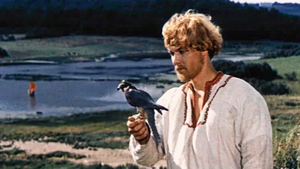
Финист - Ясный сокол

Новогодние гирлянды

Где спят снеговики?