Гордость нашей семьи – наш прадедушка

Работа посвящена исследованию жизни и деятельности во время войны и в мирное время Александрова Петра Александровича, прадедушки авторов данной исследовательской работы.
Скачать:
| Вложение | Размер |
|---|---|
 proekt_gordost_nashey_semi-nash_pradedushkav.docx proekt_gordost_nashey_semi-nash_pradedushkav.docx | 32.38 КБ |
Предварительный просмотр:
Муниципальное образовательное учреждение
средняя общеобразовательная школа № 9 им. А. С. Пушкина
Научно-исследовательский проект по английскому языку на тему:
Гордость нашей семьи – наш прадедушка
Ф. И. О. авторов:
Годунова Анастасия
7А класс
Григорьева Анна
11А класс
Ф. И.О. руководителя:
Ортина Ирина Геннадьевна
учитель английского языка
высшей квалификационной категории
Волжск
Тезисы к исследовательской работе
«Гордость нашей семьи – наш прадедушка».
Работа посвящена исследованию жизни и деятельности во время войны и в мирное время Александрова Петра Александровича, прадедушки авторов данной исследовательской работы.
Работу выполнили ученицы 7А класса Годунова Анастасия и 11А класса Григорьева Анна. Они являются двоюродными сёстрами.
Объектом исследования стала информация из документов и фотографий семейного архива, материалы библиотечного фонда, записи воспоминаний близких родственников, беседы с ними.
Цель работы:
- изучение биографии Александрова Петра Александровича
Задачи:
- выяснить, какой вклад внёс родственник авторов проекта в победу над фашистской Германией;
- познакомить школьников с военными событиями, в которых принимал участие Александров Пётр Александрович
Методы исследования:
- изучение и анализ документов и фотографий из семейного архива авторов проекта;
- документальные материалы библиотечного фонда;
- записи воспоминаний бабушки авторов проекта - Павловой Людмилы Петровны
Актуальность работы:
Данная работа имеет большое значение для молодёжи. Она помогла узнать авторам проекта и их сверстникам героическую историю Волжского района и его тружеников, в частности семьи Александровых, а также осознать великий народный подвиг в годы Великой Отечественной войны, достойный вклад жителей в общую победу нашей страны.
Целевая аудитория: учащиеся и учителя школы
Тип проекта: исследовательский, языковой.
Структура работы: работа состоит из введения, главной части, списка используемой литературы и приложения.
Content
- Introduction
The Great Patriotic war is the worst event of the 20-th century in history of Russia………………………………………………………………………………………...3
- importance of this project
- aims and problems of the research work
- methods of research
- description of pupils’ activities connected with the project
- Main part ……………………………………………………………….5
The pride of our family – our great-grandfather ___ -
- our relative is one of the first best pupils of Sotnur school
- serving in the Red army.
- fighting on fronts of the Great Patriotic war
- war awards
- life of our close relatives after war
- Conclusion……………………………………………………………….8
- the results of the project
- personal contribution of the authors
- practical use of the project
Sometimes we don’t notice how fast time passes. Years, centuries go by. One generation is replaced by another. Recent events left in the past and became historical. And more and more it would be desirable to study the history of life of our predecessors.
Life of our ancestors was greatly influenced by the Great Patriotic War. Veterans of war, who were witnesses of that historical event, are few left. There is no family which wasn’t concerned by war. The Soviet Union had great losses of people (more than 20 million) in the Great Patriotic War. The war affected our family.
Our great-grandfather took part in war battles.
Theme of our research work is “Pride of our family – our great-grandfather”
The motive of choice of this theme is that: in 2015 our country will celebrate the 70th anniversary of victory over fascist Germany in the Great Patriotic War. Various events devoted to this remarkable date are held at our school (competitions – parades of military song, meetings with war veterans, wall newspaper issues). Our literature teacher asked us to write a composition about our great-grandfather, veteran of the war. My composition was published in the local newspaper “Volzhskaya Pravda”. Later our English teacher suggested making a report about fighting of our relative in Great Patriotic war in Russian and English languages. We have been interested in this theme.
In accordance with it we laid down the aim:
- To study the biography of our great-grandfather Peter Alexandrovich Alexandrov.
To achieve this purpose the following problems were defined:
- to find out what contribution was made by our relative into victory over fascist Germany;
- to acquaint the schoolmates with war events in which our great-grandfather took par
In our research work we used the following methods: to study and analyze
- documents and photos from our family archive
- documentary materials from the library’s storage
- records of stories of our grandmother Pavlova Ludmila Petrovna
We started our work with reading the following book
- “Sotnur’s School - Power of education”. Centre-museum by name Valentin Columb, publishing house “String” Yoshkar-Ola. 2012.
This book is devoted to former pupils and teachers of Sotnur’s school who fought in the fields of battles of the World War II and made a great contribution into the victory over the Nazi Germany. In this book we read not only about heroic activities of our great-grandfather but also about his activity as a teacher after the war.
2. Magazine “Ontchico”. Publishing house “periodicals of Mary El”, Yoshkar-Ola. 1999. №5
One of the articles in this issue of the magazine told about Sotnur school and people who made their school well-known in the republic. Among them was Peter Alexandrovich Alexandrov.
3. “They defended our Motherland. We call everyone’s name”. Publishing house “Mary publishing plant” 2002.
In this book we learned about the citizens of republic of Mary El who fought in the fields of the Great Patriotic war and won a victory in the back of the enemy. In the book name of our great-grandfather is mentioned too.
So we are ready to tell you all the facts we learned.
According to our grandmother’s stories our great-grandfather Peter Alexandrovich Alexandrov was born on the 10th of April in 1919 in the village of Shigar-Ener. In the family there were four children(two sons and two daughters. He graduated from Sotnur secondary school successfully. In his General Certificate of Secondary Education there were excellent marks nearly in all subjects. The only good mark was in Art. As an excellent pupil he was awarded by the Certificate of Merit and given a tour to Moscow. On the postcard (document 1) we can see Moscow visitors, school graduates who are sitting on the terrace of Moscow river port and meeting tourists from the ship “Iosif Stalin”. Among the visitors there was our great-grandfather.
In 1939 he got into the Pedagogical Institute on the Physics and Mathematics Faculty of Mary State Pedagogical Institute named after Krupskaya, but he did not have to study because of his military service. On the twenty-fifth of November in 1939 Peter Alexandrov was taken into the Red Army. We found his red war card in the family archive (document 2). So he began to serve in the Belorussian Special Military District in the city of Mogilev. On the photo 1 there is a young fighter Peter Alexandrov. On its back side we read the sign: 1940. Peter is 21 years old. From our granny’s stories we also learned that our relative was a very honest, responsible and reliable person. That’s why in January in 1940 Peter was called by a commander of the regiment and was appointed to be responsible for the accounting of regiment property. In May of the same year their regiment was sent to summer camp in Tambov. At the end of the camp life it became a part of the 145 Infantry Division, which was located in Belgorod until June 1941. It was there that the soldiers were announced about the beginning of the war.
At the end of June in 1941 the regiment was loaded in trains and was sent to the Western Front in Bryansk. The German bomber plane “Junkers 88” flew away over the train at the railway station Zhukovka in July early morning. This was their first meeting with the enemy. Then the train went through the town of Rzhev to the station Black Yar where they were disembarked. The city was already occupied by the Germans. Having crossed the bridge over the Western Dvina River they took the firing position. The fights were strong. The sniper – “cuckoo” sat on a tree and shot at the Russian soldiers, but he failed to achieve his goal because the branches of trees prevented him. In this battle the gunner was killed. Another wounded soldier was captured by the Germans. Unfortunately in one of the battles the classmate of Peter, his countryman Viktor Aleksandrovich Romanov was killed. He served in the same regiment. Victor was not only his classmate, but also his best friend.
With the help of school atlas we found the areas of war battles around city Rzhev in which our relative fought (document 3).
In January in 1942 they drove the Germans out from the town Staritsa and located at the back of the Germans nearby Oleninsky District. But soon the regiment was surrounded by the enemies in the north of Rzhev. The supplies of food were running out of, they had to get them in the villages of Oleninsky and Baturinsky areas. Commissioner Ermolin ordered the soldiers to move to the area of the station Nelidovo.
At night, during one of the rest stops, Peter was sent to bring water for the soldiers. He circled in the forest for a long time and got lost. It already dawned, but Peter could not find his regiment’s place. Suddenly he heard the sound of footsteps and hid behind a bush. Two German soldiers went beside him. Peter did not move because he did not have a gun. At that time ordinary soldiers were not given guns. Only commander had a personal gun. Peter decided to move on their own and some time later he met soldiers and officers. They walked at night and during the day they tried not to get out of the forest. The fifth of July became one of the happiest days for our great-grandfather. On this day they got to the partisans.
In January, 1942 the 39th Army, where my great-grandfather served, came to the back of the enemies through the Oleninsky District to the village Yablontsevo. Enemy aircraft attacked and bombed the swamp, which is called "Svizhsky moss" and nearby village. Everybody run in different directions. Fighters, emerged from the Germans’surrounding, were sent to the assembly point. Our great-grandfather was defined to the 332nd Artillery Regiment. On the photo 2 we see him among the other fighters and commanders. The regiment was sent to the Leningrad front a month later. In the family archive another his postcard is kept, in which he wrote about himself to his mother and sisters (document 4). He also told that they were going to the front by war train and asked not write him until he sends his new address.
At this regiment my great-grandfather fought till August, 1944. And since 1944 the regiment became a part of the First Ukrainian Front, of the 194th brigade. This brigade fought with fascists on the territory of the countries: Hungary, Czechoslovakia, Poland,Germany In Berlin Peter was from the 24th of April to the 2nd of May1945. On the 2of May in 1945 soldiers and officers of the 194th Brigade were immersed in trains and were sent to the east. It was a way home.
On the 9th of May in 1945 very good news came: "Victory!" In the evening on the 8th of May a pact about the capitulation of Nazi Germany was signed. Soldiers took photos. On the photo 3 we can see our great-grand father with his war comrade Leonid Sidorkin. This photo was taken in the village Leneshits near Chek town Launs. Their smiling and happy faces show us that the war has finished.
It was not possible for our great-grandfather to come back to his native village in 1945 because the war began in the eastern direction. He returned to his native village only in June 1946.
Peter Alexandrovich Alexandrov was awarded by many medals and orders.
In 1943 he got the medal "For the Defense of Leningrad". At that time the commander of the Leningrad Front was Marshal of the Soviet Union Govorov. After one of the most important battles Peter Alexandrovich was awarded the medal "For Courage". He got the medal in the interval between the war battles just in the regiment place (photo 4). We also found an old list of with printed text in our family archive (document 5). It says that his commanders congratulate Peter Alexandrov with great government award.
For courage and heroism he got the Order of the Red Star, the Order of "World War of the second degree," medals "For Military Merit", "For Bravery", "For the capture of Berlin", "For the Liberation of Prague", "for the victory over German” 1941-1945, commemorative medals.
As we mentioned before, our great-grandfather entered to study to the Pedagogical institute in 1939, which he finished after the war. Having returned home after the war he began to work as a teacher of Maths in his native Sotnur school. On the photo 5 we can see the group of teachers of Sotnur school (Peter Alexandrov is the fourth to the left in the upper row).
He was respected by his students and teachers. He took an active part in social and sport-mass activities. For many years he had been the leader of trade union of the school, the leader of the elections commission. Besides, Peter Alexandrovich liked sport. On one of the photos dated with 1950 year, we saw our relative among the football players (photo 6).The teachers were certainly to have won the cup in football completion.
More than that, Peter Alexandrovich was a good husband, a good father, grandfather.Our mothers, our grandmother stated this fact.
Peter Alexandrovich died in 2002 at the age of 83 years, when we were little children. Not only his direct descendants, but also students and teachers of Sotnur secondary school remember and will remember him for a long time.
We are proud of our relative and we’ll remember him
We, successors of the victory, live in peace thanks to our ancestors. We shouldn’t forget what they had done for our future peaceful life on the earth. We should preserve peace in the world.
In conclusion we’d like to say that making a project helped us to learn much about the history of our family. We also learned about fighting of the citizens of our republic including our close relative in the Great Patriotic War. We’ll share this information with our classmates, friends and teachers. We hope, whenever, we will tell our story to our children.
List of reference books
- “Sotnur’s School - Power of education”. Centre-museum by name Valentin Columb, publishing house “String” Yoshkar-Ola. 2012.
- Magazine “Ontchico”. Publishing house “periodicals of Mary El”, Yoshkar-Ola. 1999. №5
3. “They defended their Motherland. We call everyone’s name”.

Сорняки
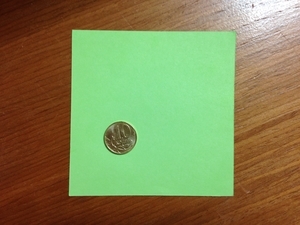
О падающих телах. Что падает быстрее: монетка или кусочек бумаги?

Л. Нечаев. Яма

Рисуем ананас акварелью

Новогодние гирлянды