THE MOON
Презентация научной работы по астрономии на английском языке.
Скачать:
| Вложение | Размер |
|---|---|
 fizika.pptx fizika.pptx | 243.56 КБ |
Предварительный просмотр:
Подписи к слайдам:
C ontents: The Moon The Moon observation Observation periods What to watch on the moon The most interesting objects of the Moon The map of the Moon Сonclusion The list of references
The Moon Moon, at the moment, is the only natural satellite of our planet. For us, the moon is always facing one side only, as around the axis of rotation coincides with the period of the speed and the movement in the orbit.
The Moon observation Moon, thanks to its proximity to the Earth, is the most accessible object of observation for astronomers at any level. For observations of the moon suit even the smallest optical instrument. Let 's list the optical devices , depending on the size ( aperture ) and an increase in : D 50-100 mm. - An increase of 30 - 200X - 5-2,5 km diameter of the object . D 120-200 mm. - An increase in the 200- 400X - 2-1.5 km diameter of the object . D 250-350 mm. - Increase 400 - 600H - 1-0,7 km diameter of the object . D - is the aperture of the telescope , followed by an increase , and further there is the object size (diameter in kilometers ), which can be treated with such indicators . Air quality can make significant adjustments to the data. But , nevertheless , the observations of the moon can be carried out under conditions unsuitable for telescopic observations of other space objects
Observation periods Astronomical program "Virtual Moon Atlas" is used for planning observations of the Moon. Most favorable moments to observe the moon, it soon after the new moon , and to the first quarter , as well - from the last quarter and before the new moon . Additionally, observations falls on the last quarter of the morning, which is characteristic of a more transparent atmosphere and the best image quality. Choose periods when the moon rises high above the horizon - the higher , the lower layer of the atmosphere and better picture quality. Observations LunyNablyudeniya conducted along the terminator - the band that divides the moon into the lighted and shaded area, you go farther from the terminator on the illuminated side , and the brighter the image will be dazzling . In such cases, use the lunar filter. Such filters have different densities and are used for different light levels - the closer to the full moon , the more the density of the filter
What to watch on the moon Getting to the observations of the moon , start with a tour , using 15 - 30x magnification , along the terminator , then advance to plan their observations using " Virtual Moon Atlas " , move to a more detailed inspection of the selected objects , with increases as allowed by the quality of the atmosphere. On the Moon, there are many entities that should be studied by observing with a telescope : Craters - mainly drums, most extended education on the Moon , similar to terrestrial craters , perfect for observing astronomers at any level. Mountain ranges - the real mountains , ridges collected in a chain , with quite earthly names. The height of the lunar mountains up to several kilometers. Sulcus - furrow length from tens to hundreds of kilometers . width of up to 4 km . a depth of 1 km. Maria - vast lowlands flooded by lava , in those days , when the Moon felt the blows of cosmic bodies . Sea is much darker and stand out against the bright surface. Dome - a sphere-like round education, up to 15 km . across. The nature of these structures is unknown , it is one of the many mysteries of the moon . Earthshine Moon - seen in moments of thin crescent . During such periods, the Moon is to the Sun - Earth and the dark surface of the moon is illuminated little light reflected from Earth. Short lunar phenomenon - not yet have a scientific explanation for this phenomenon local character that appear on or above the surface of the moon. These phenomena are characterized by transient glow in the shaded areas , every kind of object motion and vague phenomena , auroras and flares.
The most interesting objects of the Moon Crater Alphonse Crater Alphonse ( Alphonsus ) - an impact crater (13.39 ° w. W. 2.85 ° s. Etc.), the diameter of 110.54 km., Depth of 2.73 km. on the border of the sea clouds, named in honor of Alfonso X of Castile, King of Castile and amateur astronomy. This crater is bordered by no less interesting craters Ptolemy and Al- Batrudzhi Arzachel . By the way, in the crater Alphonsus was landed NASA probe Ranger 9. The central peak of the crater has a height of 1500 m .
Apennine Mountains Apennine Mountains (Apennines) - Mountains of the Moon (14.63 ° - 28.47 ° N and 10.21 ° W - 7.34 ° E) on the border of the sea in the north Rains Moon. The length of the mountains 600 km. and the highest point 5, 4 km. Named in honor of Earth Apennines. In the north-east of the Apennines was made landing lunar module Apollo 15. Age mountains about 4 billion years. Adjacent to the mountains interesting formations - the crater Eratosthenes, Aestuum Bay (west), Clarity Sea (east), Gemskie mountains (north-east), mountains of rotting swamp and Archimedes (in the north), sea vapors (in the south).
Crater Copernicus Crater Copernicus (Copernicus) - impact crater, named after the great astronomer Nicolaus Copernicus. Located in the Ocean of Storms, has a depth of 3.8 km. Age crater 800 million years. Emissions rocks formed at impact has radial structure and extends to a distance of 800 km. Crater diameter of more than 96 km. To the north of the crater Copernicus was landed the Lunar Module Apollo 12. In the crater observed transient lunar phenomena.
Crater Gassendi Crater Gassendi ( Gassendi ) - an impact crater (17,50 ° S and 39,98 ° W) in the north-west sea humidity. Diameter of 112 km. depth of 1.4 km. On the west wall of the crater up to 2.5 km in height. Bottom of the crater filled with lava, the central peak rises to 1.3 km. In the crater Gassendi observed transient lunar phenomena (glow in the shadow of the crater during eclipses, all kinds of traffic.
Bay of Rainbows Bay of Rainbows (Sinus Iridum ) - an impact crater (44.1 ° c. W. 31.5 ° s. D) in northwestern Sea of Rains, 236 km. across. Partially surrounded by Jura Mountains. In the Gulf of many small craters on the surface filled basalt lava. Rainbow Bay and surrounding education are one of the most interesting objects for observation of our satellite.
Crater Plato Crater Plato (Plato) - an impact crater (51.62 ° c. W. 9.38 ° s. Etc.), the diameter of 100 km, the depth of 2 km. age of about 4 billion years. In northwestern Alps mountains in the south of Tenerife mountains. Bottom of the crater filled basalt lava and central peak is absent, against the surface of the moon looks like a dark spot.
Crater Petavius Crater Petavius ( Petavius ) - impact crater with a diameter of 180 km. depth of 3.3 km. The estimated age of 3.8 billion years. In the center of the crater are giant peaks (up to 1.8 km. Tall) diverge from the furrows, which are themselves objects for observation
Tycho Tycho - impact crater, named after the famous astronomer Tycho Brahe. Located in the southern region of the moon, and the age of the crater 108 million years. Rays from the crater, whose length is 1,500 km. On the edge of this crater landed automatic station Surveyor-7.
The map of the Moon
Сonclusion The Moon is the only natural satellite of the Earth. For us, the moon is always facing one side only, as around the axis of rotation coincides with the period of the speed and the movement in the orbit. On the Moon, there are many entities that should be explored with the help of telescopic observations: craters, ridges, furrows, maria , domes, gray light of the Moon.
The list of references http://astersolar.ru/nablydeniya/167-nablyudeniya-luny.html http://muzey-factov.ru/tag/halleys-comet
Thank you for your attention !

Рисуем "Ночь в лесу"

Калитка в сад
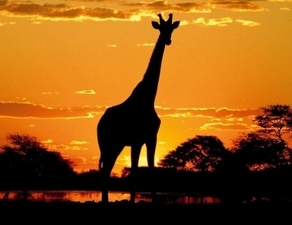
Н. Гумилёв. Жираф
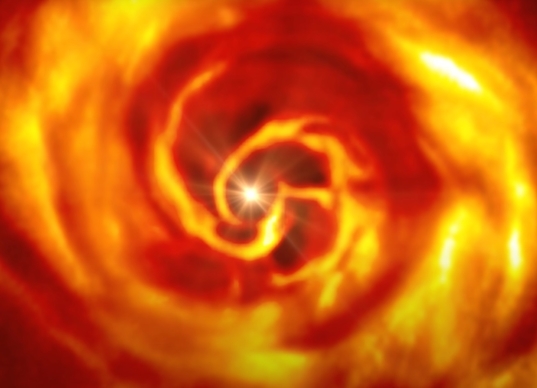
Астрономы наблюдают за появлением планеты-младенца

Рисуем крокусы акварелью