Презентация по теме "Профессии" (профессия моей мечты)

Данная работа является творческим проектом учащейся по теме "Профессии", показывает ее видение работы режиссера и объясняет, почему ей хотелось бы выбрать именно эту профессию как будущую.
Скачать:
| Вложение | Размер |
|---|---|
 film_director.ppt film_director.ppt | 1.79 МБ |
 rezhisser.doc rezhisser.doc | 99.5 КБ |
Предварительный просмотр:
Подписи к слайдам:
Film Director A film director is a person who directs the actors and crew in the making on a film
Responsibilities They are responsible for turning the script into a sequence of shots
Responsibilities They direct what tone it should have and what an audience should gain from the cinematic experience
Responsibilities Film directors often takes part in hiring key crew members
Responsibilities They coordinate the actors moves, or blocking
Tendencies Outline a general plotline and let the actors improvise dialogue
Tendencies Control every aspect, and demand that the actors and crew follow instructions precisely
Tendencies Write and produce their own films
Tendencies Collaborate on screenplays with long-standing writing partners
Tendencies Appear in their films
Tendencies Compose a music score for their films
Предварительный просмотр:
A film director is a person who directs the actors and crew in the making of a film. They control a film's artistic and dramatic aspects, while guiding the technical crew and actors.
Responsibilities
Filmmakers are responsible for overseeing creative aspects of a film under the film producer. They often develop the vision for a film and carry the vision out, deciding how the film should look. They are responsible for turning the script into a sequence of shots. They also direct what
tone it should have and what an audience should gain from the cinematic experience. Film directors are responsible for deciding camera angles, lens effects and lighting with the help of the cinematographer, and set design with the production designer. They will often take part in hiring key crew members. They coordinate the actors' moves, or
blocking, and also may be involved in the writing,
financing, and editing of a film.
The director works closely with the cast and crew to shape the film. Some like to conduct rigorous rehearsals in preproduction while others do so before each
scene. In either case this process is essential as it tells the director as well as other key members of the crew (Director of Photography, stunt choreographer, hair stylist, etc.), how the actors are going to play the scene, which enables them to make any necessary adjustments. Directors often use storyboards to illustrate sequences and concepts, and a director's viewfinder to set up camera angles.
The director also plays a key role in post-production. He or she works with the editor to ensure that the emotions of the scene and the close ups, mid shots and wide or long shots appropriately reflect which character is driving the narrative. The director also advises on the
(colour) grading of the final images, adding warmth or frigidity to the composition of the shots to reflect the emotional subtext of the character or environment. The director will sometimes participate in the sound mix and musical composition of the film.
Methods of film directing
Directors have different methods of filming. Some styles include:
- Outline a general plotline and let the actors improvise dialogue. Notable examples include Christopher Guest, Wong Kar-wai, Spike Lee, Jim Wong, Wim Wenders, Mike Leigh, Jean-Luc Godard, Miklós Jancsó, Gus Van Sant, Judd Apatow, David Cronenberg, Ben Affleck and occasionally Robert Altman, Sergio Leone and Federico Fellini.
- Control every aspect, and demand that the actors and crew follow instructions precisely. Notable examples include David Lean, Akira Kurosawa, Steven Spielberg, Victor Fleming, James Cameron, Michael Bay, George Lucas, Francis Ford Coppola, Stanley Kubrick, Christopher Nolan, David Fincher, Jeremy Viele,Guillermo del Toro, and Alfred Hitchcock.
- Write and/or produce their own films. Notable examples include Woody Allen, Werner Herzog, John Cassavetes, Ingmar Bergman, Stanley Kubrick, James Cameron, Albert Magnoli, George Lucas, J. F. Lawton, David Cronenberg, Charlie Chaplin, Billy Wilder, Ed Wood, David Lynch, the Coen Brothers, Francis Ford Coppola, Sofia Coppola, Pedro Almodóvar, John Hughes, Nick Park, Kevin Smith, Quentin Tarantino, Todd Field, Cameron Crowe, Oren Peli, Eli Roth, Paul Thomas Anderson, Guillermo del Toro, Rainer Werner Fassbinder, Oliver Stone, Terrence Malick , Brendan Moriarty , John Singleton, Jeremy Viele, Spike Lee, Orson Welles, Akira Kurosawa, Hayao Miyazaki, M. Night Shyamalan, Paul Haggis, Billy Bob Thornton, James Wong, Tyler Perry, Robert Rodriguez, Christopher Nolan, George A. Romero, Sergio Leone, Satyajit Ray DJ Pooh, Stuart Beattie, Steven Spielberg, Sidney J. Furie, Michael Mann, Joe Carnahan, Guy Ritchie and Tim Burton have all written screenplays for a small number of their films.
- Collaborate on screenplays with long-standing writing partners. Notable examples include Elia Kazan and Tennesse Williams, Terry Gilliam and Charles McKeown/Tony Grisoni, Wes Anderson and Owen Wilson/Noah Baumbach, Edgar Wright and Simon Pegg, Martin Scorsese and Nicholas Pileggi/Paul Schrader/Jay Cocks, Yasujiro Ozu and Kôgo Noda, Sir Peter Jackson and Fran Walsh, or Robert Zemeckis and Bob Gale, Luis Buñuel and Jean-Claude Carrière/Luis Alcoriza, Krzysztof Kieslowski/Krzysztof Piesiewicz, Frank Capra/Robert Riskin, Michelangelo Antonioni/Tonino Guerra, Billy Wilder/I.A.L. Diamond, Sergio Leone and Sergio Donati and Christopher Nolan/Jonathan Nolan/David S. Goyer.
- Be the cinematographer and/or
editor. Notable examples include Nicolas Roeg, Akira Kurosawa, Stanley Kubrick, Steven Soderbergh, Josef von Sternberg, David Lean, Albert Magnoli, Don Coscarelli, Robert Rodriguez, James Cameron, Ed Wood, Gaspar Noe, Raja Gosnell,
Tony Kaye, Takeshi Kitano, Andy Warhol, Shinya Tsukamoto, Kenneth Anger, the Coen Brothers.
- Appear in their films. Notable examples include Clint Eastwood, Orson Welles, Mel Gibson, Martin Scorsese, Sir Peter Jackson, John Waters, John Carpenter, Spike Lee, Tyler Perry, Rainer Werner Fassbinder, Kevin Costner, Kenneth Anger, Woody Allen, Jon Favreau, Quentin Tarantino, Eli Roth, Mel Brooks, Ben Stiller, Charlie Chaplin, Sam Raimi, Roman Polanski, Billy Bob Thornton, Sylvester Stallone, M. Night Shyamalan, Will Hay, Harold Ramis, Robert de Niro, John Woo, Kevin Smith, Ed Wood, Warren Beatty, DJ Pooh and Edgar Wright. Kenneth Branagh, Alfred Hitchcock and Spike Jonze made memorable cameo appearances in their films.
- Compose a music score for their films. Notable examples include Charlie Chaplin, Clint Eastwood, John Carpenter, Alejandro Amenábar, Satyajit Ray and Robert Rodriguez.
- Cast a certain actor in more than one of their films. Notable examples include Mel Brooks, Tim Burton, Ed Wood, Robert Rodriguez, Wolfgang Reitherman, Don Bluth, Quentin Tarantino, Martin Scorsese, Rob Zombie, Sam Raimi, James Cameron, Spike Lee, John Musker, Ron Clements, Edgar Wright, Vincenzo Natali, Terry Gilliam, Spike Jonze, Eli Roth, Christopher Nolan, Woody Allen, Kevin Smith, Ivan Reitman, Robert Zemeckis, Akira Kurosawa, Jason Friedberg and Aaron Seltzer.
Professional organizations
In the United States, directors usually belong to the Directors Guild of America. The Canadian equivalent is the Directors Guild of Canada. In the UK, directors usually belong to Directors Guild of Great Britain.
In Europe, FERA, the Federation of European Film Directors, represents 37 national directors' guilds in 30 countries.
A new director might earn as much as $200,000 a year, while the most successful can earn over $500,000 or even millions per film in some cases.

Д.С.Лихачёв. Письма о добром и прекрасном: МОЛОДОСТЬ – ВСЯ ЖИЗНЬ

Марши для детей в классической музыке

Горячо - холодно
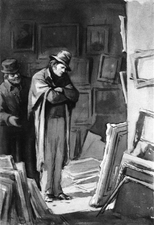
"Портрет". Н.В. Гоголь

У меня в портфеле