Исследовательская работа"Игры:прошлое и настоящее"

Основной идеей проекта «Дворовые игры: "Прошлое и настоящее» является необходимость включения дворовых игр в организацию воспитательно - образовательного процесса для обобщения социально-психологического опыта, развития коммуникативных навыков и укрепления физического здоровья школьников.
Скачать:
| Вложение | Размер |
|---|---|
 buklet.docx buklet.docx | 574.28 КБ |
 igry_proshloe_i_nastoyashchee_1.pdf igry_proshloe_i_nastoyashchee_1.pdf | 1.96 МБ |
Предварительный просмотр:
Cossacks and Robbers
Players are divided into two teams: Cossacks and Thieves. The two teams agree on the area that they are going to play in. This can be a courtyard, staircase, street, or even several courtyards. The Thieves think of a secret word. The Cossacks then go somewhere (or turn around) so they can’t see the Thieves.
The Thieves escape, leaving chalk marks (on walls, trees, curbs, etc.) to mark the direction they are moving in. The Cossacks then have to use the marks to find the Thieves. The Cossacks have to bring each of the Thieves to a prison and guard him, trying to get him to cough up the secret word.
This game develops basic scouting skills and navigational abilities and teaches children not to rat others out.

Hopscotch
You will need chalk, an asphalt playground, and a stone (or puck). Use the chalk to draw quadrilaterals with numbers in a sequence. You can even play this game alone. The main idea is to get the stone (or puck) into one of the quadrilaterals, then jump to it using one foot or both feet, and come back using the same route. The winner is the player who manages to make it the whole way, from 1 to 10.
This game develops dexterity, accuracy, the ability to concentrate, and knowledge of numbers.

Lyceum Student Scientific Society
English Language Section
Soviet outdoor games

Municipal Educational Establishment
“Lyceum № 6 named after I.Z. Shuklin”
Made by: Taytakova Polina
Guided by: Podyapol’skaya S.A
Gorno-Altaisk
2024
French skipping
The key element of this game is an elasticated band (rezinochka) that is stretched between two girls while the other players jump over it. Ideally, there are three to four players. Each participant performs specific types of jumps and jump combinations, while the elasticated band is held at different heights, ranging from ankle level ("first" jump) to neck level ("sixth" jump).
If the jumper makes a mistake, she has to switch places with one of the girls holding the elastic band in place. If there are four players, the pair is swapped when both players in a pair make a mistake.
This game develops spatial orientation, coordination, and attention span. It teaches children how to train, win, lose with dignity, jump higher, and be friends with others, even during moments of rivalry.

Leapfrog
According to the rules of the game, the guide is chosen, who will have to crouch down, bending his head. The rest of the participants must jump through it.
After all the participants jumped through the guide, he changes position, rising slightly. Participants again must jump through it in turn.
So, the driver always rises higher and higher, and the game continues until one of the players, jumping over, does not hit the driver. If this happens, it takes its place and the game begins anew.

Red Rover
Red Rover is a classic children’s game that can be played with a large group. The objective of the game is to have one team try to break through the other team’s line by calling out the name of a player on the other team. If the player called out is not able to hold onto the line, they join the calling team.
The game continues until one team has taken all of the players from the other team. To play, you will need two teams of equal size and a large open space. Each team lines up shoulder-to-shoulder, holding hands.
One team starts by calling out the name of a player on the other team. If that player comes over to their side, they join their team. If not, the game continues until one side has taken all of the players from the other side. Red Rover is a great way to get everyone moving and having fun!

Предварительный просмотр:

Пейзаж
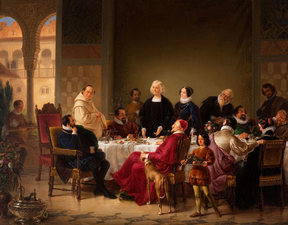
Колумбово яйцо

Рукавичка
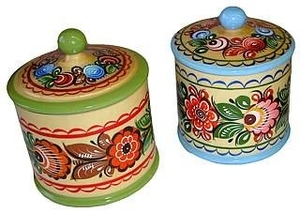
Городецкая роспись

Дельфин: сказка о мечтателе. Серджио Бамбарен